Why Marketing is Important: The Ultimate Guide for Businesses
I believe one of the most common, yet costly, misconceptions among new business owners is the idea that a good product or service sells itself. Many founders assume that if their quality is outstanding, “word of mouth” will do all the heavy lifting and customers will automatically show up. They often look at marketing as a luxury reserved only for corporate giants.
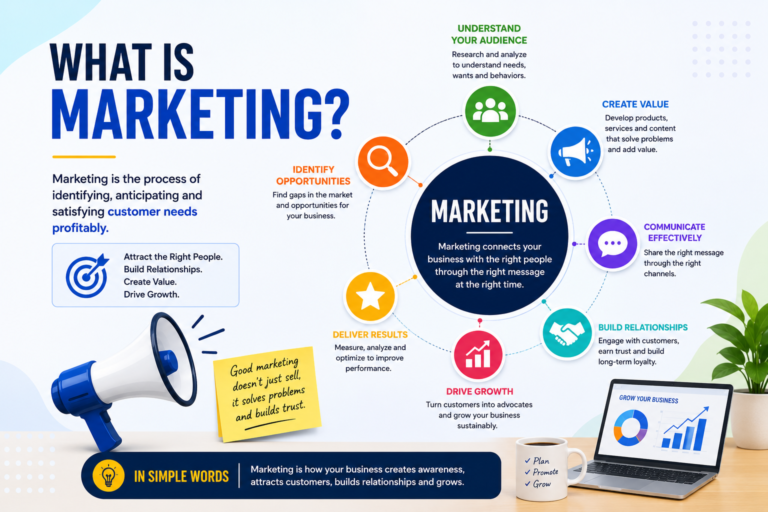
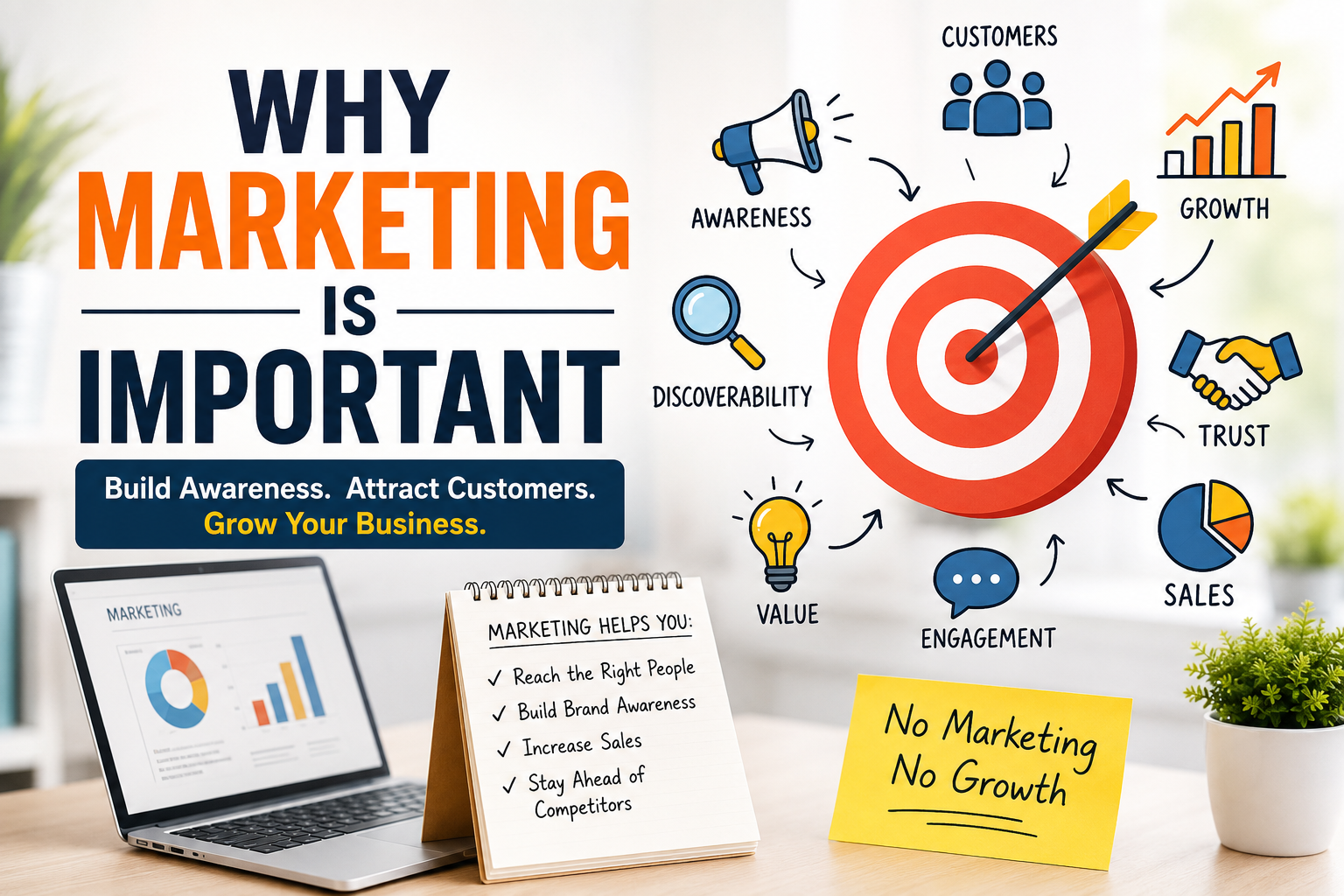
But in today’s hyper-competitive market, where millions of local services and digital brands are vying for consumer attention, staying invisible is the fastest way to shut down. In my opinion, no matter how great your offering is, it cannot sell if people do not know it exists. That is exactly why marketing is important. Marketing is the bridge that connects your business with the people who need it.
Whether you are running a home-based boutique, a local coaching center, a cloud kitchen, or a professional service agency, marketing is not just an expense; it is the oxygen that keeps your business alive and growing. In this guide, I will share my perspective, practical examples, and step-by-step reasons why active marketing is essential for any business today.
Table of Contents
- 1. Builds Awareness and Visibility in a Crowded Market
- 2. Establishes Trust and Credibility with Consumers
- 3. Explains Your Value Proposition: Why Choose You?
- 4. Levels the Playing Field with Industry Giants
- 5. Drives Consistent Sales and Sustainable Revenue
- 6. Helps You Understand Changing Customer Demands
- No Marketing vs. Active Marketing Comparison
- My Top Low-Cost Marketing Tactics for Startups
- Frequently Asked Questions
- Conclusion
1. Builds Awareness and Visibility in a Crowded Market
We live in one of the most crowded and vibrant markets in history. Walk down any busy commercial street, and you will see dozens of shops selling similar goods. Search for a service online, and you are flooded with options. In my opinion, the biggest hurdle for a new business is not the quality of their work, but the fact that nobody knows they exist.
Marketing is the tool that puts your business on the map. It ensures that when someone in your locality searches for “best home bakery near me” or “professional web designer nearby,” your brand name pops up. By using basic local SEO, business profiles, and social media flyers, you transition from being a hidden gem to a visible, active choice for customers.
2. Establishes Trust and Credibility with Consumers
I believe buyers are highly value-driven and inherently cautious. Before making a payment or visiting a store, customers want to be absolutely sure about quality and authenticity. They actively look for signals of credibility.
This is where strategic marketing comes in. When you share customer testimonials on your messaging status, post video reviews on Instagram, or showcase behind-the-scenes clips of your clean cloud kitchen, you are marketing. This consistent, transparent communication builds trust. A business that actively showcases its work and client feedback will always win over a silent competitor, simply because the customer feels safer buying from a familiar brand.
3. Explains Your Value Proposition: Why Choose You?
With massive e-commerce platforms and delivery apps offering heavy discounts, why should a customer buy from you? If you do not communicate your unique value, customers will default to the cheapest option. In my view, consistent marketing is what helps businesses justify their pricing and build a loyal customer base.
Your marketing message explains your USP (Unique Selling Proposition). For instance, if you run a home boutique, your marketing shouldn’t just say “we sell clothes.” It should explain: “We source premium organic cotton and offer custom tailoring.” That distinction is what shifts the conversation from price competition to quality appreciation, and explains precisely why marketing is important for survival.
4. Levels the Playing Field with Industry Giants
Years ago, marketing required massive capital. You needed significant funds to print pamphlets, lease billboards, or buy advertisements. Naturally, only massive corporations could afford it. Today, the internet has completely democratized the landscape.
A small-scale entrepreneur operating out of a home office can compete directly with a large retail chain using social media and organic content. A well-crafted, relatable video showcasing your customized handmade gifts can easily get thousands of views and generate dozens of orders without a single dollar spent on paid advertising. Digital marketing acts as an equalizer, allowing businesses to target their exact local demographic with pinpoint accuracy.
5. Drives Consistent Sales and Sustainable Revenue
I believe many businesses experience a “feast or famine” cycle. They get a burst of orders during holidays or peak seasons through friends and family, and then experience dry spells for the rest of the year. Relying solely on accidental walk-ins or immediate social circles is not a sustainable way to run a business.
Active marketing creates a reliable pipeline of new leads. By consistently updating your product catalogs, running targeted local social media ads, or sending seasonal newsletters to your existing client base, you maintain a steady flow of inquiries. It helps you keep your business at the top of your customers’ minds so that when they need a service, they think of you first.
6. Helps You Understand Changing Customer Demands
Marketing is never a one-way street. In my view, it is an interactive dialogue between a business and its target market. When you post a poll on your Instagram stories asking, “Which color do you prefer for our next product launch?” or when you read reviews left by your clients, you are engaging in market research.
This feedback loop tells you exactly what the market wants, allowing you to pivot quickly. Marketing keeps your business aligned with the actual demand, preventing you from wasting resources on products that won’t sell.
No Marketing vs. Active Marketing Comparison
To put this into perspective, let us look at a side-by-side comparison of how small, consistent marketing efforts can impact the growth and profitability of a business.
| Business Aspect | Scenario A: Zero Active Marketing | Scenario B: Active Local Marketing |
|---|---|---|
| Customer Reach | Limited to immediate neighborhood and close family friends. | Reaches clients across the entire region and gains organic inquiries. |
| Trust Level | Slow to build; new customers are skeptical about quality and rates. | High; built via online reviews, video testimonials, and social proof. |
| Pricing Leverage | Forced to discount heavily to match cheap mass-market options. | Command premium rates by highlighting unique craftsmanship and USP. |
| Sales Consistency | Unpredictable; highly vulnerable to off-season drops. | Consistent pipeline of leads via social updates and seasonal campaigns. |
| Long-term Value | Difficult to scale; remains a small side-hobby. | Develops into a recognizable brand that can hire staff and expand. |
My Top Low-Cost Marketing Tactics
If you are convinced that marketing is important but are worried about a tight budget, here are some of the most effective, low-cost marketing strategies that can work wonders for you:
- Optimize Online Directory Profiles: This is entirely free. List your business or shop on Google Maps and local listing sites. Add high-quality photos of your work, list your operating hours, and request every satisfied customer to leave a review. This is the single most powerful tool for driving local traffic.
- Leverage Messaging App Features: Stop using personal accounts for business. Use professional business profiles, set up product catalogs with clear pricing, and use automated away messages. Use status updates to showcase daily work and client reviews.
- Create Video Content (Reels & Shorts): You do not need professional cameras or editing software. A smartphone and decent lighting are enough. Show your packaging process, share quick tips in your domain, and let your audience see the hard work behind your products.
- Collaborate Locally: Partner with complementary businesses. If you bake cakes, talk to a local party decorator or organizer to cross-promote each other’s services to their respective clients.
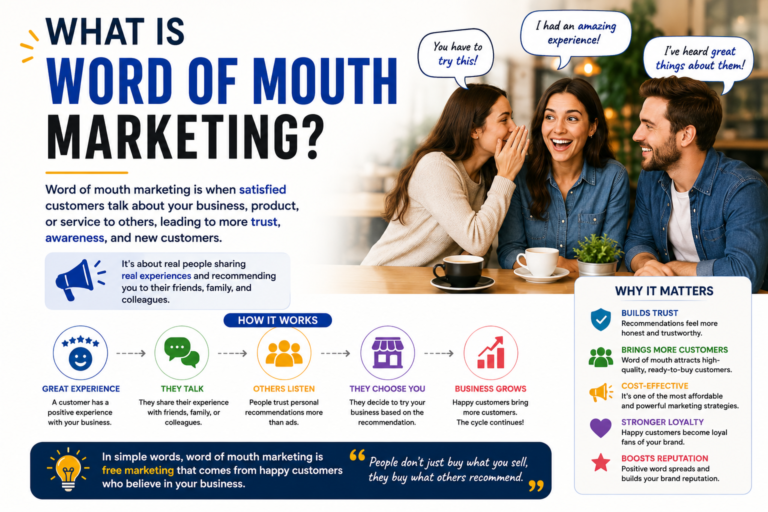
- Offer Referral Incentives: Give your existing customers a discount on their next order if they refer a friend who makes a purchase. Word of mouth marketing is highly effective, and a small incentive speeds it up.
Frequently Asked Questions
Q1. Can I do marketing for my business for free?
Yes, absolutely! Many of the most powerful digital marketing tools today are completely free. Setting up a business profile on search engines, posting organic video content on social media, sharing catalogs on messaging apps, and asking clients for direct referrals cost nothing but your time and effort. As your sales grow, you can reinvest a portion of your profits into paid local ads.
Q2. Is tax registration mandatory for selling products online?
If you want to sell through your own website, social media, or messaging apps, tax registration regulations vary by region. Many countries or states have minimum sales thresholds before registration is mandatory. However, if you plan to sell on major e-commerce marketplaces, they typically require tax registration right from the start, regardless of your sales volume.
Q3. How do I handle courier and shipping for remote clients?
Shipping is very straightforward today. I suggest using shipping aggregator platforms or local courier integrations. These services pick up the packages directly from your location and deliver them nationwide or globally. Offering reliable tracking and flexible payment options can significantly boost customer confidence.
Q4. How much of my revenue should I spend on marketing?
For a new business, I recommend starting with a low-cost organic approach. Once you have steady revenue, a good rule of thumb is to reinvest 5% to 10% of your monthly sales back into marketing activities (like printing quality labels, running local social promotions, or booking exhibition stalls).
Q5. What is the difference between marketing and sales?
I like to explain it this way: marketing is the process of getting people interested in your business and bringing them to your doorstep or inbox. Sales is the process of converting that interest into a paid transaction. You need marketing to generate the lead, and sales skills to close the deal.
Q6. Should I hire a marketing agency for my home business?
In the early stages, I strongly advise against hiring an agency. Most agencies are expensive and might not understand your unique local audience. It is far better to learn the basics yourself—like managing your own social media and talking directly to your customers. Once your business scales to a point where you cannot manage it alone, only then should you consider outsourcing.
Conclusion
I believe countless high-quality startups close down simply because they remain invisible. On the other hand, even average products can build sustainable brands when their founders know how to communicate value. Understanding why marketing is important and implementing it consistently is the defining line between a struggling hobby and a successful, scalable brand.
You don’t need a degree in marketing or a massive budget to start. Begin by listing your business on search engines, talking to your customers on professional messaging apps, and sharing your journey on social media. The consistency of your efforts will determine how fast your brand grows.
If you are planning to launch a venture or want to improve your current sales, sharing your ideas and getting feedback is a great way to start. In my opinion, taking these basic marketing steps is the best path to growth.