Many people use the terms marketing and selling interchangeably, but they are not the same. Although both activities aim to generate revenue for a business, they differ significantly in their objectives, strategies, processes, and customer focus. Understanding the marketing and selling difference has helped me realize that successful businesses don’t simply sell products—they first understand customer needs, build relationships, and create value before making a sale.
Selling is primarily concerned with converting prospects into customers, whereas marketing begins much earlier by identifying customer needs, developing the right products, creating awareness, and nurturing long-term relationships. In today’s competitive business environment, companies that combine effective marketing with strong selling techniques achieve greater customer satisfaction and sustainable growth.In this comprehensive guide, I’ll explain the difference between marketing and selling, compare their objectives, strategies, advantages, and limitations, and discuss why both functions are essential for business success.
Table of Contents
What is Marketing?
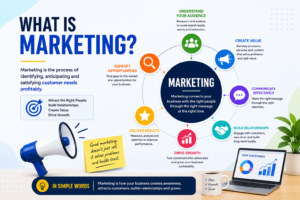
Marketing is the process of identifying customer needs, creating valuable products or services, promoting them effectively, and building long-term customer relationships. Rather than focusing solely on making immediate sales, marketing aims to attract, engage, satisfy, and retain customers over time.
When I implement marketing strategies, my goal is to understand my target audience, solve their problems, and position my brand as the preferred solution. Marketing involves market research, branding, advertising, pricing strategies, digital marketing, customer engagement, and ongoing relationship management.
Main Objectives of Marketing
- Understand customer needs.
- Create customer value.
- Build brand awareness.
- Generate qualified leads.
- Increase customer satisfaction.
- Develop long-term relationships.
- Improve customer loyalty.
- Support sustainable business growth.
What is Selling?
Selling is the process of persuading potential customers to purchase a product or service. It focuses on converting prospects into buyers through direct communication, negotiation, product demonstrations, and closing techniques.
As a salesperson, my primary objective is to convince customers to make a purchase by highlighting product features, benefits, pricing, and value propositions. Selling generally occurs after marketing has generated awareness and interest.
Main Objectives of Selling
- Convert prospects into customers.
- Increase sales revenue.
- Achieve sales targets.
- Generate immediate business.
- Build customer confidence.
- Close sales effectively.
Marketing and Selling Difference
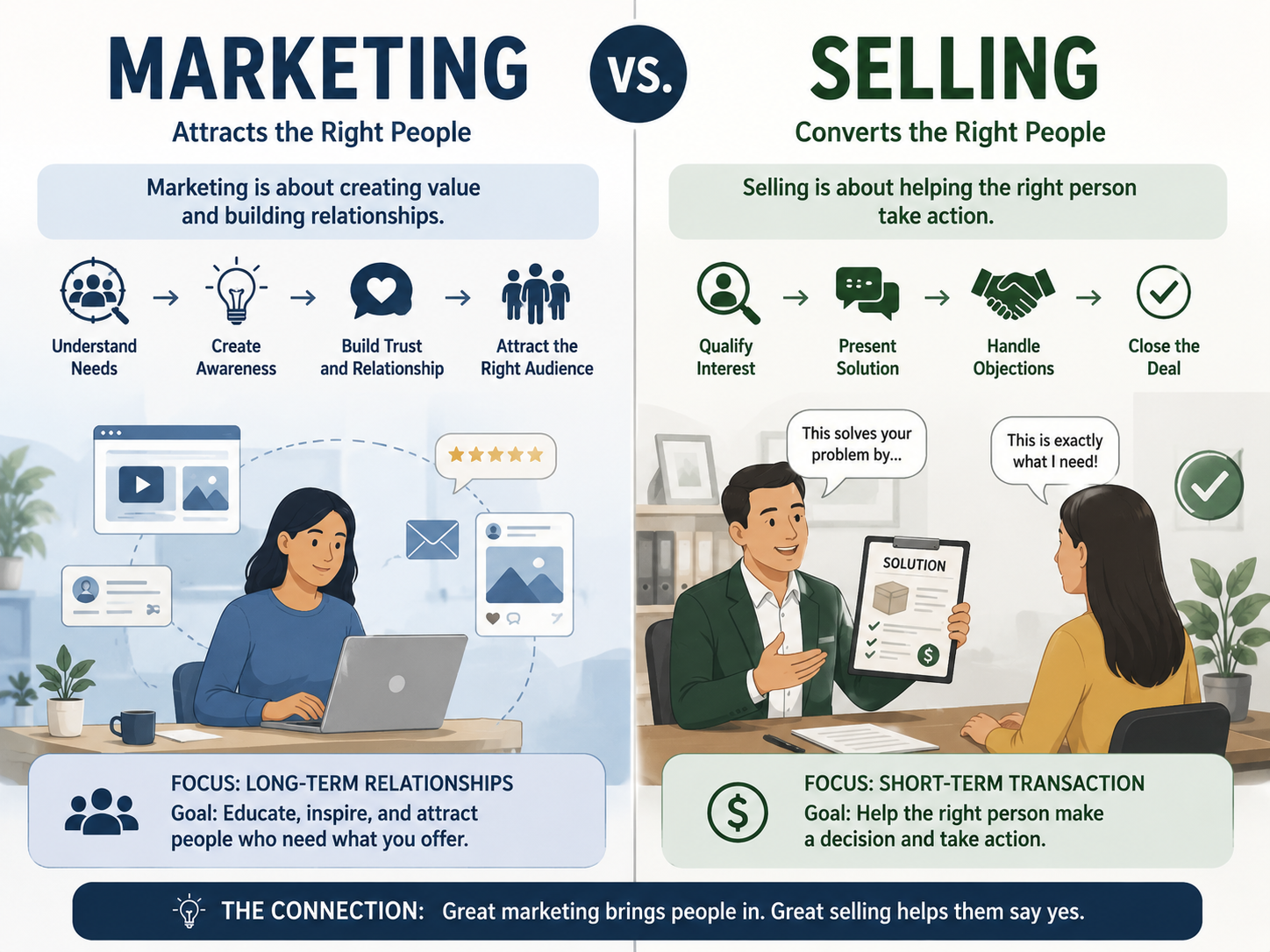
The fundamental difference between marketing and selling lies in their focus. Marketing begins with understanding customer needs and creating products that satisfy those needs, while selling begins after the product is developed and focuses on persuading customers to purchase it.
Marketing adopts a customer-centric approach, whereas selling is generally product-centric. Marketing seeks long-term customer relationships and brand loyalty, while selling often concentrates on immediate revenue generation.
Marketing vs Selling Comparison Table
| Basis of Comparison | Marketing | Selling |
|---|---|---|
| Primary Focus | Customer needs | Product sales |
| Objective | Create customer value | Generate immediate sales |
| Approach | Customer-oriented | Product-oriented |
| Time Horizon | Long-term | Short-term |
| Process Begins With | Market research | Finished product |
| Main Goal | Customer satisfaction | Sales conversion |
| Communication | Two-way communication | One-way persuasion |
| Relationship | Long-term relationships | Transaction-focused |
| Risk | Lower through customer understanding | Higher if demand is weak |
| Success Measurement | Customer retention and growth | Sales volume and revenue |
Characteristics of Marketing
- Customer-focused strategy.
- Market research driven.
- Creates long-term value.
- Builds brand reputation.
- Emphasizes customer satisfaction.
- Encourages relationship building.
- Supports product development.
- Uses integrated communication channels.
- Measures customer lifetime value.
- Focuses on sustainable business growth.
Characteristics of Selling
- Sales-driven approach.
- Product-focused communication.
- Emphasizes persuasion.
- Targets immediate revenue.
- Relies on negotiation skills.
- Focuses on closing deals.
- Works directly with prospects.
- Measures sales performance.
- Often includes follow-up activities.
- Supports revenue generation.
Why Marketing and Selling are Important
Marketing and selling complement one another. Marketing creates demand by educating customers, building trust, and generating interest, while selling converts that interest into actual purchases.
Importance of Marketing
- Builds brand awareness.
- Creates customer demand.
- Improves customer loyalty.
- Supports product innovation.
- Strengthens competitive advantage.
Importance of Selling
- Generates revenue.
- Converts leads into customers.
- Builds customer confidence.
- Provides product information.
- Helps achieve business objectives.
Examples of Marketing and Selling
Marketing Example
If I launch a new smartphone, I first conduct market research, identify customer preferences, develop suitable features, create advertising campaigns, optimize my website for search engines, publish educational content, and build brand awareness before introducing the product to the market.
Selling Example
After customers visit my store or website, I explain the smartphone’s features, compare models, answer questions, address objections, offer promotions, and encourage them to complete the purchase.
Advantages of Marketing and Selling
Advantages of Marketing
- Creates loyal customers.
- Builds a strong brand image.
- Supports long-term growth.
- Improves customer satisfaction.
- Increases market share.
- Enhances customer engagement.
Advantages of Selling
- Generates immediate revenue.
- Increases product movement.
- Builds direct customer relationships.
- Provides quick customer feedback.
- Supports business profitability.
- Achieves short-term sales goals.
Common Mistakes Businesses Make
- Focusing only on selling without marketing.
- Ignoring customer research.
- Over-promoting products.
- Neglecting customer relationships.
- Using poor communication strategies.
- Ignoring digital marketing channels.
- Not following up with customers.
- Failing to measure marketing performance.
- Offering products without understanding customer needs.
- Prioritizing short-term profits over long-term loyalty.
Marketing or Selling: Which is Better?
Rather than viewing marketing and selling as competing concepts, I see them as complementary business functions. Marketing creates demand and attracts the right audience, while selling converts interested prospects into paying customers.
Without marketing, selling becomes much more difficult because customers may not recognize the product or trust the brand. Likewise, without effective selling, even the strongest marketing campaigns may fail to generate revenue. Businesses achieve the best results when both functions work together as part of an integrated strategy.
Frequently Asked Questions
What is the main marketing and selling difference?
Marketing focuses on understanding customer needs and creating value before a sale, while selling focuses on persuading customers to purchase products or services.
Is marketing more important than selling?
Both are equally important. Marketing generates awareness and demand, while selling converts that demand into revenue.
Can a business succeed without marketing?
Although businesses may generate short-term sales through selling alone, long-term growth generally requires effective marketing strategies that build customer trust and brand loyalty.
Which comes first: marketing or selling?
Marketing usually comes first because it identifies customer needs, develops products, and creates awareness before the selling process begins.
How do marketing and selling work together?
Marketing attracts and nurtures potential customers, while selling communicates directly with those prospects to complete the purchase and generate revenue.
Conclusion
Understanding the marketing and selling difference is essential for anyone studying business, managing a company, or planning to become an entrepreneur. Although both functions contribute to business success, they serve different purposes. Marketing focuses on identifying customer needs, creating value, building relationships, and developing long-term brand loyalty, whereas selling concentrates on converting interested prospects into customers through effective communication and persuasion.
In today’s highly competitive marketplace, successful businesses recognize that marketing and selling are not alternatives but complementary activities. Strong marketing strategies make selling easier by attracting qualified prospects and building trust, while skilled selling ensures that customer interest results in actual purchases and revenue.
By integrating customer-focused marketing with effective sales techniques, I can build stronger relationships, improve customer satisfaction, increase profitability, and achieve sustainable long-term business growth. Businesses that balance both disciplines are better equipped to adapt to changing customer expectations and maintain a competitive advantage in their industry.