If you have ever started a business or researched how to grow a business online, you have likely run into the term “branding.” However, if you are like most entrepreneurs I talk to, you might still find yourself asking: what is branding, and why does it matter so much? Is it just a fancy logo and a catchy slogan, or is there something deeper to it?
In my experience, branding is one of the most misunderstood concepts in the business world. Many business owners spend thousands of rupees designing a beautiful logo, only to wonder why customers still do not trust them or buy from them. When I look at successful companies, I realize that their strength does not come from their design assets alone. It comes from the emotional connection they have built with their audience. That connection is the true core of a brand.
In this detailed guide, I will explain exactly what is branding, break down its essential elements, compare it with marketing, and provide my personal step-by-step advice on how you can build a powerful brand from scratch.
Table of Contents
Defining What is Branding (And What It Is Not)
When people ask me to explain what is branding, I always start by clearing up the biggest misconceptions. A brand is not just a logo, a product, a website, or a color palette. While these elements are important tools, they are not the brand itself.
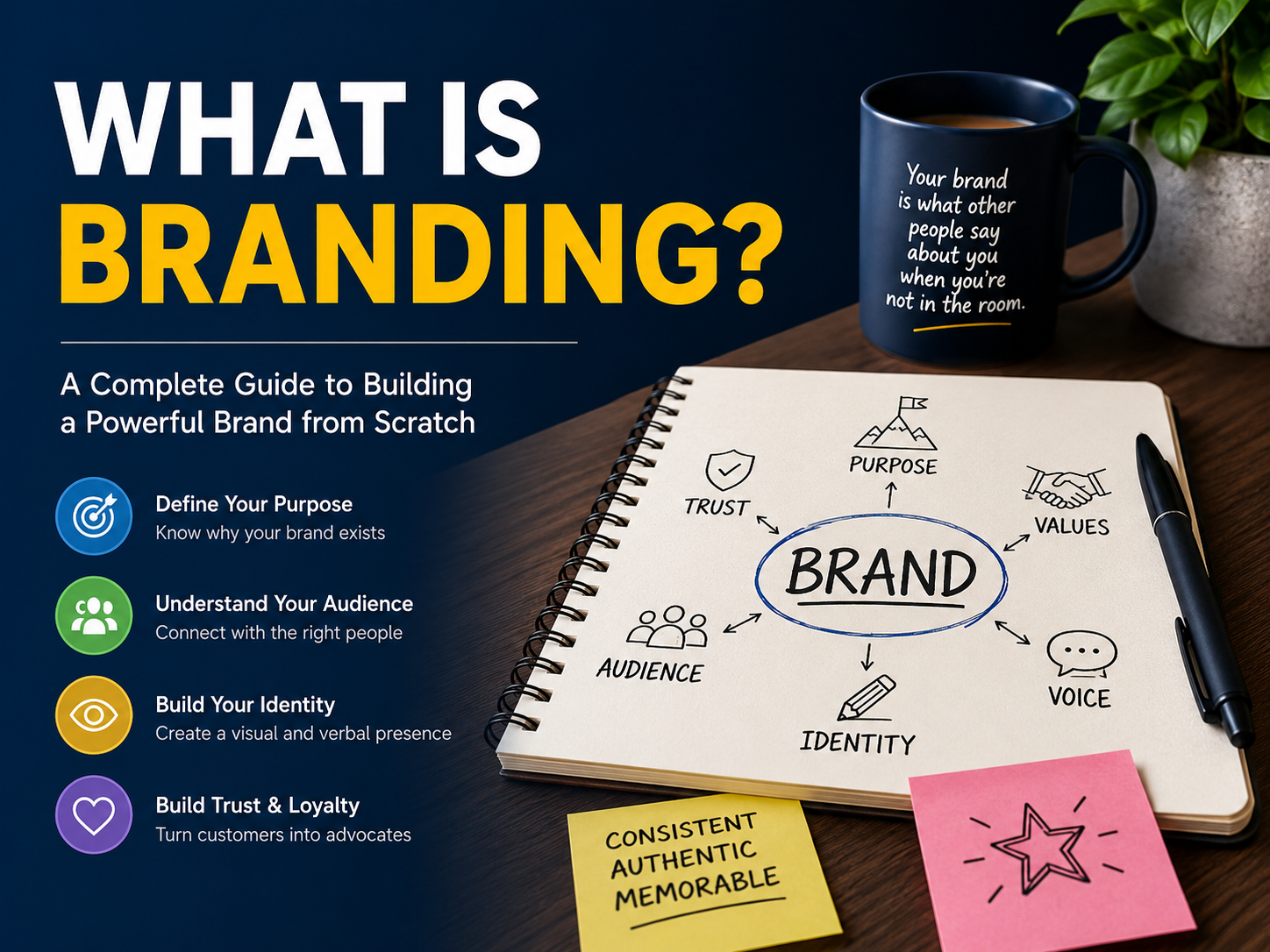
I love the definition popularized by Amazon founder Jeff Bezos: “Your brand is what other people say about you when you’re not in the room.”
To put it in my own words, branding is the active process of shaping the perception that people have of your business. It is the sum of all feelings, associations, memories, and expectations that a customer has when they see your company name or product. When you engage in branding, you are deliberately trying to influence that gut feeling. You are telling your audience who you are, what you stand for, and why they should choose you over anyone else.
Branding vs. Marketing: What is the Difference?
I often see business owners use these two terms interchangeably, but they are very different disciplines. Understanding the difference between marketing and what is branding is essential if you want to build a sustainable business.
In my opinion, the easiest way to understand the difference is this: Branding is who you are, and marketing is how you get attention.
Marketing is the set of tools, processes, and tactics you use to actively promote your products or services. This includes things like running Meta Ads, writing SEO blog posts, posting on social media, or running email campaigns. Marketing is action-oriented and often changes based on trends and seasonal campaigns.
Branding, on the other hand, is the foundation. It is your mission, your values, your brand voice, and the promise you make to your customers. Branding remains consistent over the years, serving as the north star for all your marketing efforts. If marketing is the hook that catches the customer’s attention, branding is the reason they stay loyal to your business for decades.
Why Branding is Critical for Your Business Success
You might wonder: is investing time and money into branding really worth it for a small business or startup? In my experience, the answer is a resounding yes. Here is why I believe strong branding is essential for your success:
- It Builds Trust and Credibility: Customers are naturally skeptical of businesses they do not know. A professional, consistent brand makes your business look established, reliable, and safe to buy from.
- It Solves the Pricing Problem: When you have no brand, you are forced to compete on price, which kills your profit margins. A strong brand allows you to charge premium prices. Think about why people willingly pay ₹80,000 for an iPhone when they can buy a basic smartphone for ₹10,000—that is the power of branding.
- It Drives Customer Loyalty: A great brand connects with people on an emotional level. When customers share your values, they do not just buy your products; they become advocates for your brand, recommending you to friends and family.
- It Simplifies Marketing: When you know exactly who you are and what your brand stands for, creating ad copies, social media posts, and landing pages becomes incredibly easy and consistent.
The Core Elements of a Brand
To help you understand what is branding in a practical sense, let us break down the key components that make up a complete brand strategy. I categorize these into three main layers:
1. Brand Strategy (The Foundation)
This is the internal compass of your brand. It represents the “why” behind your business and consists of:
- Brand Purpose: Why does your business exist beyond making money? What problem are you trying to solve?
- Brand Values: The core beliefs that guide your business decisions (e.g., sustainability, transparency, speed).
- Target Audience: The specific group of people who need your products and share your outlook.
2. Brand Identity (The Visuals)
This is the face of your brand. It is how your business represents itself visually to the world and includes:
- Logo: A simple, memorable symbol that acts as the primary identifier for your company.
- Color Palette: Colors trigger emotional responses. I suggest choosing 2-3 primary colors that match your brand personality (e.g., blue for trust, green for health, red for excitement).
- Typography: The fonts you use in your logo, website, and marketing materials. Fonts convey tone—clean sans-serif fonts feel modern, while serif fonts feel traditional and authoritative.
3. Brand Voice and Messaging (The Personality)
This is how your brand speaks and interacts with the audience. It is your brand’s personality translated into words and includes:
- Brand Voice: Is your tone professional, humorous, authoritative, or friendly? I recommend keeping this tone consistent across your emails, social media, and website.
- Brand Slogan/Tagline: A short, memorable phrase that sums up your brand promise (e.g., Apple’s “Think Different” or Tata’s “Leadership with Trust”).
My Step-by-Step Guide to Building a Brand
If you want to build a strong brand for your business, I recommend following this structured process. This is the exact workflow I suggest to founders who want to establish a professional identity in the market:
Step 1: Define Your Target Audience
I have learned that you cannot be everything to everyone. If you try to appeal to all age groups and demographics, your branding will become diluted and weak. I suggest creating a detailed “buyer persona” describing your ideal customer’s age, location, hobbies, frustrations, and buying habits.
Step 2: Establish Your Mission and Values
Before you design anything, write down your brand’s mission statement. Ask yourself: what change do I want to bring to my customers’ lives? What values will my business never compromise on? Sharing these values openly is how you build a loyal community.
Step 3: Research Your Competitors
I suggest analyzing your main competitors to understand their strengths and weaknesses. Look at their logos, their website layouts, their social media tone, and customer reviews. The goal of this research is not to copy them, but to find a gap in the market where you can stand out.
Step 4: Craft Your Brand Personality and Voice
Imagine your brand as a person. What would their personality be like? Would they be a wise mentor, an adventurous friend, or a reliable assistant? I suggest choosing 3-4 adjectives that describe your brand personality and using them to guide your copywriting.
Step 5: Design Your Visual Assets
Once you have defined your strategy, you can begin the design process. If you have the budget, I highly recommend hiring a professional graphic designer. If you are starting on a tight budget, you can use tools like Canva to select a cohesive color palette and simple typography. Keep your logo design clean, simple, and easily readable on mobile screens.
Step 6: Maintain Absolute Consistency
This is the most critical step. I have seen many businesses fail in their branding because they lack consistency. If your Instagram looks colorful and fun, but your website looks dry and corporate, you will confuse your customers. I recommend creating a simple “Brand Style Guide” document that outlines your colors, fonts, and tone of voice, and ensuring your team follows it strictly across all touchpoints.
Real-World Examples of Successful Branding
To help visualize how these concepts work in the real world, let us look at some brands that have mastered the art of perception:
1. Apple (The Innovator)
Apple does not sell technical specifications; they sell design, simplicity, and status. When you buy an Apple product, you are buying into their vision of “thinking differently.” Their visual identity is clean, minimalist, and premium, and their message is always focused on the user’s creative potential rather than the processor speed.
2. Amul (The Taste of India)
In India, Amul has built a brand that is synonymous with family, trust, and national pride. Through their iconic Amul Girl cartoons and topical humor, they have managed to stay relevant and beloved across generations. Their branding makes us feel that they are a part of every Indian household, which has secured their market dominance for decades.
3. Nike (The Motivator)
Nike does not talk about the rubber soles of their shoes in their ads. Instead, they focus on the emotion of determination and triumph. Their slogan “Just Do It” and their swoosh logo inspire people to overcome obstacles. They brand themselves as the partner of every athlete, whether you are a professional runner or someone just starting their fitness journey.
Frequently Asked Questions
What is branding in simple words?
In simple words, branding is the process of creating a unique name, image, and reputation for your business in the minds of your customers. It is how you make your target audience feel about your company, separating you from your competitors.
What are the 4 elements of branding?
Based on my experience, the four main pillars of branding are Brand Identity (your logo, colors, and design), Brand Strategy (your mission, values, and target audience), Brand Messaging (your slogan, tagline, and tone of voice), and Brand Experience (how customers feel when interacting with your product or support team).
Why is branding different from a logo?
A logo is merely a graphic symbol used to identify your business. Branding is the entire ecosystem around your business—it includes your customer service, your product quality, your social media presence, your company values, and the overall emotional connection you build with your audience. A logo is just one visual asset that represents the brand.
How much does branding cost for a small business?
If you are starting out, branding can cost ₹0 if you define your strategy yourself and use free design platforms like Canva. However, as your business grows, I suggest investing between ₹15,000 and ₹75,000+ to hire a professional designer or agency to build a custom brand identity system for you.
Conclusion
Understanding what is branding is the first step toward building a business that lasts. If you focus only on selling products, you will always be vulnerable to competitors who copy your features or undercut your prices. But when you build a brand, you build an intangible asset that cannot be easily replicated.
My final piece of advice is to start building your brand from day one by focusing on honesty and consistency. Be clear about your values, deliver outstanding service, and speak to your customers in a consistent tone. Over time, these small actions will compound, transforming your business into a trusted, recognizable brand.

