Entrepreneurship and intrapreneurship are two powerful concepts that drive innovation, business growth, and economic development. Although they share many similarities, they differ significantly in terms of ownership, risk, decision-making, resource allocation, and business objectives.
Understanding entrepreneurship vs intrapreneurship helps decide whether we want to build our own business or innovate within an existing organization.Both entrepreneurs and intrapreneurs are problem solvers who introduce new ideas, improve processes, and create value.
However, while an entrepreneur builds a business from the ground up, an intrapreneur develops innovative solutions while working inside an established company.In this comprehensive guide, I’ll explain the differences between entrepreneurship and intrapreneurship, discuss their similarities, advantages, challenges, examples, and help determine which path may be the better choice depending on individual goals and career aspirations.
Table of Contents
What is Entrepreneurship?
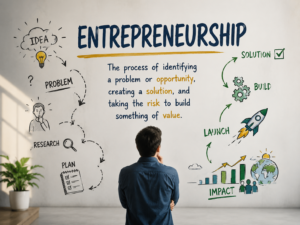
Entrepreneurship is the process of identifying business opportunities, developing innovative ideas, organizing resources, taking financial risks, and creating a business with the objective of generating profit while delivering value to customers.
As an entrepreneur, one owns the business, makes strategic decisions, invests resources, accepts financial risks, and receives the rewards if the business succeeds.
Main Features of Entrepreneurship
- Business ownership – The entrepreneur owns the business and is responsible for its operations, assets, and profits.
- High financial risk – Entrepreneurs bear the financial responsibility for the business and may lose their investment if it fails.
- Independent decision-making – Entrepreneurs make important business decisions without needing approval from others.
- Innovation-driven – They develop new products, services, or ideas to meet customer needs and gain a competitive advantage.
- Profit-oriented – The main goal is to earn profits while ensuring the business remains financially sustainable.
- Long-term business growth – Entrepreneurs focus on expanding the business by increasing sales, customers, and market share over time.
- Resource management – They effectively manage resources such as money, employees, equipment, and time to achieve business objectives.
What is Intrapreneurship?
Intrapreneurship refers to the practice of encouraging innovation within an existing organization. Instead of starting a new business, an Intrapreneur works as an employee while developing new products, services, technologies, or business processes that help the company grow.
Although he contribute entrepreneurial thinking, the company owns the business, provides funding, and assumes most of the financial risk.
Main Features of Intrapreneurship
- Innovation inside an organization – Intrapreneurs create and implement new ideas while working within an existing organization.
- Limited personal financial risk – The organization bears the financial costs and risks, reducing the intrapreneur’s personal financial exposure.
- Company-funded projects – New initiatives are financed by the organization rather than the individual.
- Access to organizational resources – Intrapreneurs can use the company’s employees, technology, infrastructure, and funding to develop their ideas.
- Team collaboration – They work with colleagues across different departments to develop and implement innovative solutions.
- Focus on business improvement – The goal is to improve existing products, services, processes, or operations within the organization.
- Organizational growth – Successful innovations help the organization increase efficiency, competitiveness, profitability, and long-term success.
Entrepreneurship vs Intrapreneurship
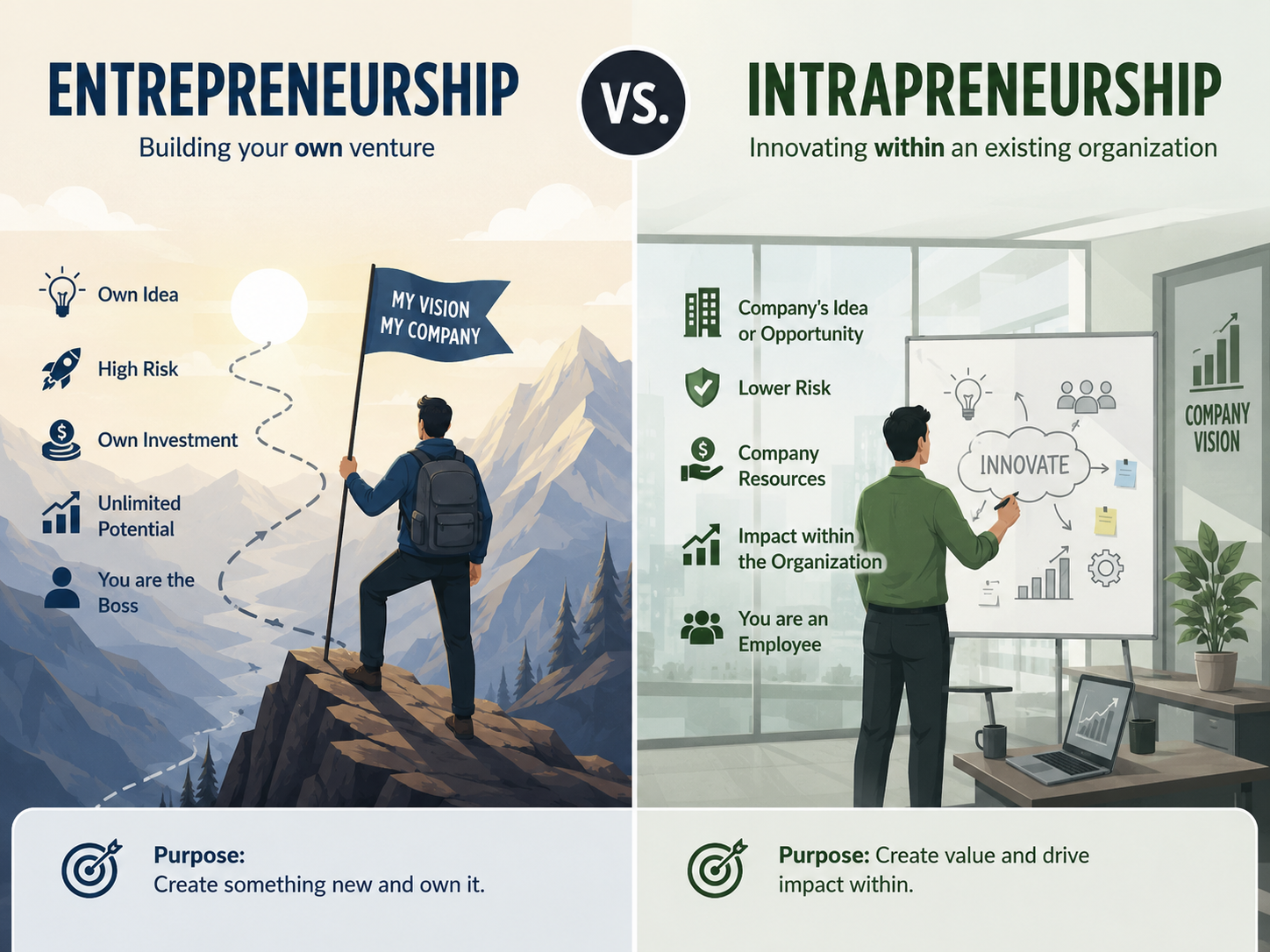
Although both approaches encourage creativity and innovation, the biggest distinction lies in ownership and responsibility. An entrepreneur creates and owns the business. An intrapreneur innovates within a company without owning the organization.
Entrepreneurs are responsible for funding, hiring, operations, marketing, legal compliance, and overall business success. Intrapreneurs, on the other hand, receive organizational support while focusing on innovation, product development, and improving existing business operations.
Entrepreneurship vs Intrapreneurship: Comparison Table
| Factor | Entrepreneurship | Intrapreneurship |
|---|---|---|
| Ownership | You own the business. | The organization owns the business. |
| Financial Risk | Very high. | Low personal financial risk. |
| Investment | Personal or investor funding. | Company-funded resources. |
| Decision Making | Independent. | Organizational approval required. |
| Primary Goal | Create and grow a business. | Improve the existing business. |
| Rewards | Profits and business ownership. | Salary, bonuses, promotions, recognition. |
| Resources | Self-managed. | Provided by the company. |
| Job Security | Lower. | Higher. |
| Innovation | Build new businesses. | Create improvements within existing businesses. |
| Responsibility | Complete business responsibility. | Project responsibility within the organization. |
Similarities Between Entrepreneurship and Intrapreneurship
Despite their differences, entrepreneurship and intrapreneurship share several important characteristics. Both require innovative thinking, leadership, strategic planning, and the ability to solve business problems effectively.
- Innovation – Generating new ideas, products, services, or processes that create value and improve business performance.
- Creativity – Thinking imaginatively to develop original solutions and identify new opportunities.
- Leadership – Guiding, motivating, and inspiring others to achieve shared business goals.
- Problem-solving – Identifying challenges, analyzing their causes, and implementing effective solutions.
- Decision-making – Evaluating available options and selecting the best course of action for the business.
- Strategic thinking – Planning for the future by setting goals and making decisions that support long-term success.
- Customer-focused mindset – Understanding customer needs and delivering products or services that provide value and satisfaction.
- Continuous improvement – Regularly seeking ways to enhance products, services, and business processes.
- Goal orientation – Staying focused on achieving specific business objectives and measurable results.
- Adaptability – Responding effectively to changes in the market, technology, and customer demands.
Characteristics of an Entrepreneur
- Takes financial risks – Invests personal or borrowed funds and accepts the possibility of financial loss.
- Owns and manages a business – Establishes, operates, and oversees the daily activities of the business.
- Develops innovative business ideas – Creates new products, services, or business models to meet market needs.
- Builds teams from scratch – Recruits, trains, and leads employees to support business operations and growth.
- Secures funding – Obtains capital through personal savings, loans, investors, or other financing sources.
- Creates long-term business strategies – Plans for sustainable growth, competitive advantage, and future success.
- Focuses on profitability and growth – Aims to increase revenue, profits, and market share over time.
- Accepts full responsibility for success or failure – Is accountable for all business outcomes, including achievements and setbacks.
Characteristics of an Intrapreneur
- Innovates within an organization – Develops and implements new ideas while working inside an existing company.
- Uses company resources – Relies on the organization’s funding, technology, facilities, and personnel to support innovation.
- Works collaboratively – Cooperates with colleagues and teams across departments to achieve shared objectives.
- Improves existing products or services – Enhances the quality, efficiency, or value of the organization’s current offerings.
- Contributes to organizational growth – Helps increase the company’s competitiveness, productivity, and long-term success.
- Faces limited financial risk – The organization bears the financial costs and risks of innovation, not the individual.
- Focuses on operational efficiency – Identifies ways to streamline processes, reduce costs, and improve overall performance.
- Drives internal innovation – Encourages and implements changes that strengthen the organization’s products, services, or operations.
Advantages of Entrepreneurship and Intrapreneurship
Advantages of Entrepreneurship
- Complete business ownership – Entrepreneurs have full control over the business, its operations, and its direction.
- Unlimited income potential – Earnings are not fixed and can increase as the business grows.
- Freedom to make decisions – Entrepreneurs independently make strategic and operational decisions.
- Opportunity to build a personal brand – They can establish a unique reputation and identity in the market.
- Ability to scale globally – Successful businesses can expand into national and international markets.
- Long-term wealth creation – Business growth and asset ownership can generate lasting financial wealth.
Advantages of Intrapreneurship
- Stable salary – Intrapreneurs receive a regular income regardless of the success of individual projects.
- Access to company resources – They can use the organization’s funding, technology, facilities, and expertise.
- Lower financial risk – The company bears the financial costs and risks of innovation.
- Professional growth opportunities – Employees gain new skills, experience, and career advancement opportunities.
- Opportunity to innovate without starting a company – Intrapreneurs can develop new ideas within an existing organization.
- Support from experienced teams – They collaborate with skilled colleagues and receive guidance from management and specialists.
Challenges Faced by Entrepreneurs and Intrapreneurs
Entrepreneurship Challenges
- Funding difficulties – Raising enough capital to start or expand the business can be challenging.
- Business uncertainty – Entrepreneurs face unpredictable market conditions and changing customer demands.
- High financial risk – They may lose their personal investment if the business is unsuccessful.
- Market competition – Competing with established businesses requires continuous innovation and effective marketing.
- Resource limitations – Limited finances, staff, and equipment can restrict business growth.
- Long working hours – Entrepreneurs often work extended hours to manage and grow their businesses.
Intrapreneurship Challenges
- Organizational bureaucracy – Complex procedures and hierarchical structures can slow innovation.
- Limited decision-making authority – Intrapreneurs often need approval from managers before implementing ideas.
- Approval processes – New projects may require multiple levels of authorization, delaying progress.
- Resistance to change – Employees and management may be reluctant to adopt new ideas or processes.
- Corporate policies – Company rules and regulations can limit creativity and flexibility.
- Restricted ownership of ideas – Innovations developed by intrapreneurs usually belong to the organization rather than the individual.
Real-World Examples
Examples of Entrepreneurship
- Starting an e-commerce business – Creating an online store to sell products or services directly to customers.
- Launching a software startup – Establishing a company that develops and markets innovative software solutions.
- Opening a restaurant – Starting and managing a food service business to meet customer demand.
- Creating a digital marketing agency – Offering services such as SEO, social media marketing, and online advertising to businesses.
- Developing an educational platform – Building a website or application that provides online learning resources and courses.
Examples of Intrapreneurship
- Developing a new product inside a technology company – Designing and launching innovative products while working within an existing organization.
- Creating innovative internal software – Developing software that improves the company’s internal operations and productivity.
- Improving manufacturing processes – Introducing more efficient production methods to reduce costs and increase quality.
- Launching a new business division – Establishing a new department or business unit to expand the organization’s offerings.
- Introducing AI-powered customer support within an organization – Implementing AI tools such as chatbots or virtual assistants to enhance customer service and operational efficiency.
Which One Should You Choose?
The right choice depends on your career goals, risk tolerance, financial situation, and personal ambitions.
You Should Consider Entrepreneurship If you:
- Want to own a business – You want full ownership and control over your business and its future.
- Enjoy taking calculated risks – You are comfortable making informed decisions despite uncertainty.
- Prefer complete independence – You like making your own decisions without relying on others.
- Have a unique business idea – You have an innovative product, service, or solution you want to bring to market.
- Want unlimited earning potential – You are motivated by the opportunity to grow your income through business success.
You Should Consider Intrapreneurship If you:
- Enjoy innovation but prefer job security – You like creating new ideas while maintaining stable employment.
- Want access to established resources – You prefer using an organization’s funding, technology, and expertise.
- Prefer working in teams – You enjoy collaborating with colleagues to achieve shared goals.
- Like solving organizational challenges – You are motivated by improving business processes, products, or services.
- Want professional growth within a company – You aim to develop your skills and advance your career while contributing to organizational success.
Frequently Asked Questions
What is the main difference between entrepreneurship and intrapreneurship?
The primary difference is ownership. Entrepreneurs build and own businesses, while intrapreneurs innovate within organizations owned by others.
Which involves greater financial risk?
Entrepreneurship involves significantly greater financial risk because you invest your own capital or secure external funding. In intrapreneurship, the organization generally bears the financial risk.
Can an intrapreneur become an entrepreneur?
Yes. Many entrepreneurs begin their careers as intrapreneurs, gaining valuable experience before launching their own businesses.
Do both require innovation?
Absolutely. Innovation is central to both entrepreneurship and intrapreneurship, although it is applied in different organizational contexts.
Which offers higher earning potential?
Entrepreneurship offers unlimited earning potential through business ownership, whereas intrapreneurship typically provides stable salaries, bonuses, and career advancement opportunities.
Conclusion
Understanding entrepreneurship vs intrapreneurship allows you to choose the career path that best aligns with your goals, strengths, and appetite for risk. While entrepreneurs build businesses from the ground up and assume full responsibility for their success, intrapreneurs drive innovation within established organizations using existing resources and support systems.
Both paths contribute significantly to innovation, economic development, and business growth. Entrepreneurship provides independence, ownership, and potentially unlimited financial rewards, while intrapreneurship offers stability, organizational resources, and opportunities to innovate without the burden of owning a business.
Ultimately, neither approach is universally better than the other. The ideal choice depends on whether you value business ownership and independence or prefer creating meaningful innovations within an established company. By understanding their differences and similarities, you can make an informed decision that supports your long-term professional and personal aspirations.