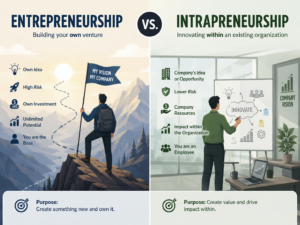
Entrepreneurship is one of the primary drivers of economic development, innovation, and business growth. Whenever I think about creating a new business, solving real-world problems, or introducing innovative products and services, entrepreneurship is at the center of that journey. It goes far beyond simply starting a business—it involves identifying opportunities, taking calculated risks, managing resources, and creating value for customers and society.In today’s rapidly evolving business environment, entrepreneurship has become an attractive career path for students, professionals, and aspiring business owners alike. Whether I want to launch a startup, build an online business, or create social impact through innovation, understanding the definition of entrepreneurship is the first step toward achieving those goals.In this comprehensive guide, I’ll explain the definition for entrepreneurship, explore its key characteristics, discuss different types of entrepreneurs, highlight its importance, examine the entrepreneurial process, and answer frequently asked questions to provide a complete understanding of this essential business concept.
Table of Contents
Definition for Entrepreneurship
Entrepreneurship is the process of identifying a business opportunity, organizing resources, taking calculated risks, and creating or managing a business venture with the objective of generating value, solving customer problems, and earning profits.
In simple terms, entrepreneurship means transforming an idea into a successful business by combining creativity, innovation, leadership, planning, and effective management. It involves recognizing opportunities in the market and developing products or services that satisfy customer needs while contributing to economic growth.
Entrepreneurship is not limited to launching large companies. It includes small businesses, startups, family-owned enterprises, social ventures, online businesses, and innovative projects that aim to create value and improve people’s lives.
What Does Entrepreneurship Mean?
Entrepreneurship refers to the ability and willingness to develop, organize, and operate a business venture while accepting the financial and operational risks associated with it. It is a mindset that encourages innovation, problem-solving, leadership, and continuous improvement.
Rather than waiting for opportunities to appear, I actively identify market gaps, create solutions, and build sustainable businesses that meet customer demands. Successful entrepreneurship requires vision, determination, resilience, and the ability to adapt to changing market conditions.
Who is an Entrepreneur?
An entrepreneur is an individual who starts, organizes, manages, and grows a business while taking responsibility for its risks and rewards. Entrepreneurs identify opportunities, develop innovative ideas, secure resources, and lead their businesses toward long-term success.
Entrepreneurs often introduce new products, improve existing services, adopt emerging technologies, and create employment opportunities. Their ability to innovate and adapt helps businesses remain competitive in changing markets.
Characteristics of Entrepreneurship
Successful entrepreneurship is built upon several important qualities that help entrepreneurs overcome challenges and achieve sustainable growth.
Key Characteristics
- Innovation and creativity
- Risk-taking ability
- Leadership skills
- Decision-making capability
- Problem-solving mindset
- Vision for future growth
- Self-confidence
- Perseverance and resilience
- Adaptability to change
- Customer-focused thinking
- Strategic planning
- Resource management
These characteristics enable entrepreneurs to manage uncertainty, seize opportunities, and build successful businesses over the long term.
Importance of Entrepreneurship
Entrepreneurship plays a significant role in economic development and social progress. By introducing innovative products, creating employment opportunities, and encouraging competition, entrepreneurs contribute to both local and global economies.
Why Entrepreneurship is Important
- Creates employment opportunities
- Encourages innovation
- Supports economic development
- Increases market competition
- Improves living standards
- Generates wealth
- Promotes technological advancement
- Encourages self-employment
- Supports regional development
- Drives sustainable business growth
Every successful business begins with an entrepreneurial idea. Without entrepreneurship, economic growth and innovation would be significantly slower.
Types of Entrepreneurship
| Type | Description |
|---|---|
| Small Business Entrepreneurship | Locally owned businesses serving community needs. |
| Startup Entrepreneurship | Innovative businesses designed for rapid growth. |
| Social Entrepreneurship | Businesses focused on solving social or environmental problems. |
| Scalable Entrepreneurship | Companies built for expansion into national or global markets. |
| Corporate Entrepreneurship | Innovation developed within established organizations. |
| Digital Entrepreneurship | Businesses operating primarily through online platforms. |
Entrepreneurship Process
Entrepreneurship follows a structured process that transforms an idea into a functioning business.
- Identify a market opportunity.
- Conduct market research.
- Develop a business idea.
- Create a business plan.
- Secure funding and resources.
- Register and establish the business.
- Develop products or services.
- Launch the business.
- Market and promote the business.
- Evaluate performance and scale operations.
Essential Entrepreneurial Skills
Building a successful business requires both technical knowledge and strong personal skills.
Business Skills
- Financial management
- Marketing
- Sales
- Business planning
- Negotiation
- Project management
- Digital marketing
- Customer relationship management
Personal Skills
- Leadership
- Communication
- Critical thinking
- Creativity
- Decision-making
- Adaptability
- Time management
- Emotional intelligence
Advantages of Entrepreneurship
- Financial independence
- Creative freedom
- Flexible work environment
- Unlimited growth opportunities
- Personal satisfaction
- Opportunity to innovate
- Ability to create jobs
- Long-term wealth creation
- Positive social impact
- Professional development
Challenges Faced by Entrepreneurs
While entrepreneurship offers numerous rewards, it also involves significant challenges that require careful planning and resilience.
- Financial uncertainty
- Market competition
- Business risk
- Changing customer preferences
- Economic fluctuations
- Limited resources
- Time management pressure
- Regulatory compliance
- Managing employees
- Maintaining business growth
Examples of Entrepreneurship
Entrepreneurship exists in almost every industry. A person opening a neighborhood bakery, launching an e-commerce store, creating a mobile application, starting a digital marketing agency, developing renewable energy solutions, or establishing a nonprofit organization all demonstrate entrepreneurial thinking.
These ventures differ in size and purpose, but they all share the common objective of creating value by solving problems and serving customers effectively.
How I Can Become an Entrepreneur
- Identify a genuine market problem.
- Develop a practical business idea.
- Research competitors and customers.
- Create a detailed business plan.
- Improve my business and financial knowledge.
- Build a strong professional network.
- Develop leadership and communication skills.
- Secure necessary funding.
- Launch on a manageable scale.
- Continuously improve products and services based on customer feedback.
Frequently Asked Questions
What is the simple definition for entrepreneurship?
Entrepreneurship is the process of creating, organizing, and managing a business by identifying opportunities, taking calculated risks, and delivering value to customers while aiming for sustainable growth and profit.
Who can become an entrepreneur?
Anyone with a viable business idea, determination, willingness to learn, and the ability to manage risks can become an entrepreneur regardless of educational background.
Is entrepreneurship only about making money?
No. While profitability is important, entrepreneurship also focuses on innovation, solving customer problems, creating employment, and contributing to economic and social development.
What is the difference between an entrepreneur and entrepreneurship?
An entrepreneur is the individual who starts and manages a business, whereas entrepreneurship refers to the overall process of creating and developing that business.
Why is entrepreneurship important in today’s economy?
Entrepreneurship drives innovation, creates jobs, stimulates competition, encourages technological advancement, and supports long-term economic growth.
Conclusion
Understanding the definition for entrepreneurship provides a solid foundation for anyone interested in business, innovation, or self-employment. Entrepreneurship is much more than starting a company—it is a continuous process of identifying opportunities, solving problems, managing risks, and creating lasting value for customers and society.
By developing essential entrepreneurial skills, embracing innovation, and maintaining a customer-focused approach, I can build businesses that not only generate profits but also contribute to economic development and social progress. Whether my goal is to launch a startup, operate a small business, or create a global enterprise, entrepreneurship offers countless opportunities for personal and professional growth.
As industries continue to evolve through technology and changing consumer demands, entrepreneurship will remain one of the most powerful forces driving innovation, employment, and sustainable economic success across the world.