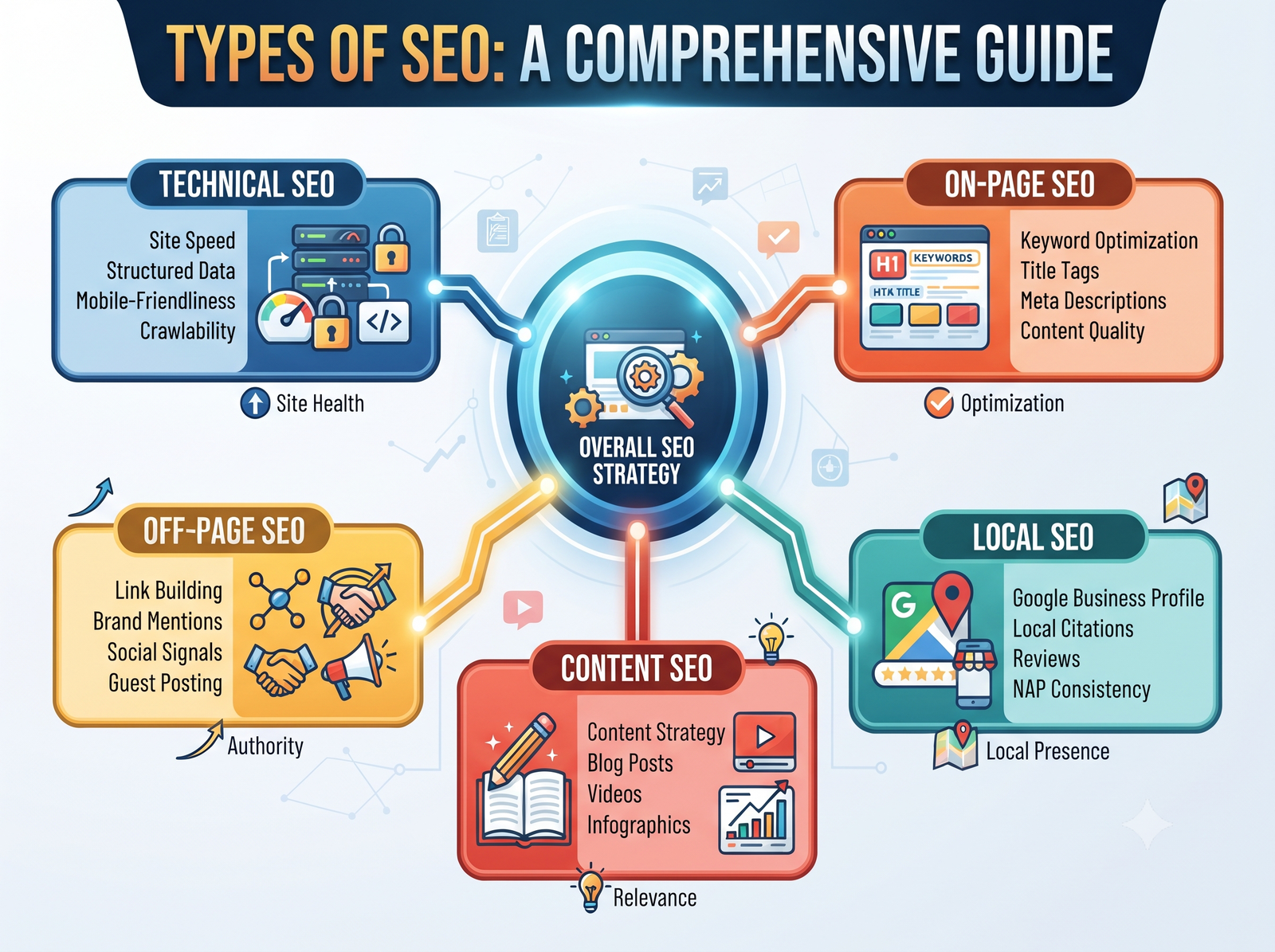
Search Engine Optimization (SEO) is one of the most effective digital marketing strategies for improving a website’s visibility on search engines like Google. Whenever I want my website to rank higher, attract qualified visitors, and generate organic traffic without relying entirely on paid advertising, SEO becomes an essential part of my digital marketing strategy.However, SEO is not a single technique. It consists of several specialized areas that work together to improve a website’s rankings, user experience, authority, and overall performance. Understanding the different types of SEO helps me build a well-rounded optimization strategy that delivers sustainable long-term results.In this comprehensive guide, I’ll explain the major types of SEO, how each one works, why they are important, and the best practices I follow to improve search engine rankings and drive consistent organic traffic.
Table of Contents
What is SEO?
SEO, or Search Engine Optimization, is the process of improving a website so that it ranks higher in search engine results pages (SERPs). The goal of SEO is to increase organic traffic by making a website more relevant, trustworthy, and user-friendly.
Search engines evaluate hundreds of ranking factors, including content quality, website speed, mobile usability, backlinks, keyword relevance, and user experience. By optimizing these factors, I improve my website’s chances of appearing on the first page of search results.
Why Understanding Different Types of SEO is Important
Many beginners believe SEO is only about inserting keywords into content. In reality, successful SEO requires multiple optimization techniques working together. Focusing on only one type of SEO may limit my website’s performance.
Benefits of Understanding SEO Types
- Improve search rankings
- Increase organic traffic
- Enhance website performance
- Provide a better user experience
- Build domain authority
- Generate more qualified leads
- Increase conversion rates
- Achieve long-term online growth
Main Types of SEO
SEO can be divided into several categories, each focusing on a different aspect of website optimization. Together, these strategies create a comprehensive SEO campaign.
- On-Page SEO
- Off-Page SEO
- Technical SEO
- Local SEO
- E-commerce SEO
- International SEO
- Mobile SEO
- Video SEO
- Image SEO
- Voice Search SEO
1. On-Page SEO
On-Page SEO refers to optimizing the elements directly on my website to improve search engine rankings and user experience. Since I have complete control over these factors, on-page optimization forms the foundation of every SEO strategy.
Key Elements of On-Page SEO
- Keyword research
- SEO-friendly URLs
- Title tags
- Meta descriptions
- Header tags (H1–H6)
- Internal linking
- Content optimization
- Image optimization
- Schema markup
- User-friendly navigation
Benefits of On-Page SEO
- Improves keyword relevance
- Enhances readability
- Boosts click-through rate (CTR)
- Increases engagement
- Supports better indexing
2. Off-Page SEO
Off-Page SEO focuses on activities performed outside my website to improve authority, credibility, and trustworthiness. Search engines consider backlinks and online reputation as strong ranking signals.
Important Off-Page SEO Techniques
- Link building
- Guest blogging
- Brand mentions
- Social media marketing
- Digital PR
- Influencer outreach
- Forum participation
- Business directory submissions
Benefits
- Builds website authority
- Improves trust signals
- Increases referral traffic
- Strengthens brand awareness
3. Technical SEO
Technical SEO ensures my website is easily crawlable, indexable, secure, and fast. Even outstanding content may struggle to rank if technical issues prevent search engines from accessing it properly.
Technical SEO Components
- Website speed optimization
- Core Web Vitals
- XML Sitemap
- Robots.txt
- HTTPS security
- Canonical tags
- Structured data
- Mobile responsiveness
- Broken link fixes
- Crawl error resolution
Benefits
- Better crawling
- Faster indexing
- Improved user experience
- Higher search rankings
4. Local SEO
Local SEO helps my business appear in location-based search results. It is especially important for businesses serving customers within a specific geographic area.
Local SEO Strategies
- Google Business Profile optimization
- NAP consistency
- Local citations
- Customer reviews
- Local keywords
- Google Maps optimization
Benefits
- More local customers
- Better visibility on Google Maps
- Higher foot traffic
- Increased local leads
5. E-commerce SEO
E-commerce SEO focuses on optimizing online stores to increase product visibility in search results and drive more sales.
Optimization Areas
- Product page optimization
- Category pages
- Product descriptions
- Customer reviews
- Product schema markup
- Internal linking
Effective e-commerce SEO helps attract shoppers with high purchase intent and improves overall conversion rates.
6. International SEO
If my business targets multiple countries or languages, international SEO helps search engines display the correct version of my website to users in different regions.
Important Techniques
- Hreflang tags
- Country targeting
- Language optimization
- Localized content
- Regional keyword research
7. Mobile SEO
With most searches now happening on mobile devices, mobile SEO ensures my website delivers an excellent experience across smartphones and tablets.
Best Practices
- Responsive design
- Fast loading pages
- Readable text
- Easy navigation
- Touch-friendly buttons
8. Video SEO
Video SEO optimizes videos for search engines and platforms like YouTube. Well-optimized videos can rank in both Google Search and YouTube search results.
Optimization Techniques
- Keyword-rich titles
- Detailed descriptions
- Video transcripts
- Custom thumbnails
- Relevant tags
- Structured data
9. Image SEO
Image SEO improves the visibility of images in Google Images while also enhancing page speed and accessibility.
Image SEO Best Practices
- Descriptive file names
- Alt text optimization
- Image compression
- Modern image formats
- Lazy loading
- Image sitemap
10. Voice Search SEO
As voice assistants become more popular, voice search SEO focuses on optimizing content for conversational queries and question-based searches.
Optimization Tips
- Answer common questions
- Use natural language
- Target long-tail keywords
- Create FAQ sections
- Improve page speed
Comparison of Different Types of SEO
| SEO Type | Main Focus | Primary Goal |
|---|---|---|
| On-Page SEO | Website Content | Improve Relevance |
| Off-Page SEO | Authority | Build Trust |
| Technical SEO | Website Performance | Improve Crawling |
| Local SEO | Location-Based Search | Local Visibility |
| E-commerce SEO | Online Stores | Increase Sales |
| International SEO | Global Markets | Reach Multiple Countries |
| Mobile SEO | Mobile Experience | Better Mobile Rankings |
| Video SEO | Video Content | Video Visibility |
| Image SEO | Images | Image Search Traffic |
| Voice Search SEO | Voice Queries | Conversational Search |
SEO Best Practices
- Publish original, high-quality content.
- Perform keyword research before writing.
- Optimize titles and meta descriptions.
- Improve website loading speed.
- Use internal and external links.
- Optimize images with descriptive alt text.
- Ensure mobile responsiveness.
- Build high-quality backlinks.
- Monitor website analytics regularly.
- Update old content to maintain rankings.
Common SEO Mistakes to Avoid
- Keyword stuffing
- Duplicate content
- Ignoring technical SEO
- Poor website speed
- Low-quality backlinks
- Missing meta tags
- Broken internal links
- Not optimizing for mobile devices
- Ignoring user intent
- Publishing thin or low-value content
Frequently Asked Questions
Which type of SEO is most important?
All types of SEO are important. On-page, off-page, and technical SEO form the core foundation, while local, e-commerce, and other specialized SEO strategies depend on my business goals.
Can I rank using only On-Page SEO?
On-page SEO is essential, but combining it with technical SEO and quality backlink building generally delivers stronger and more sustainable rankings.
How long does SEO take?
SEO is a long-term strategy. Depending on competition, website authority, and optimization efforts, meaningful improvements often take several months.
Is Local SEO only for physical businesses?
Local SEO primarily benefits businesses serving specific geographic areas, such as restaurants, clinics, agencies, retailers, and service providers.
Do all websites need technical SEO?
Yes. Every website benefits from technical SEO because it improves crawlability, indexing, performance, and user experience.
Conclusion
SEO is much more than simply adding keywords to web pages. It is a comprehensive strategy that combines content optimization, technical improvements, authority building, user experience, and continuous analysis to help websites achieve higher search engine rankings and sustainable organic growth.
By understanding the different types of SEO—including On-Page SEO, Off-Page SEO, Technical SEO, Local SEO, E-commerce SEO, International SEO, Mobile SEO, Video SEO, Image SEO, and Voice Search SEO—I can create a balanced optimization strategy that improves visibility, attracts qualified traffic, and supports long-term business success.
The most effective SEO strategy integrates all relevant SEO types rather than relying on a single technique. By consistently following best practices, creating valuable content, and adapting to search engine updates, I can build a strong online presence and maintain competitive rankings in search results.

